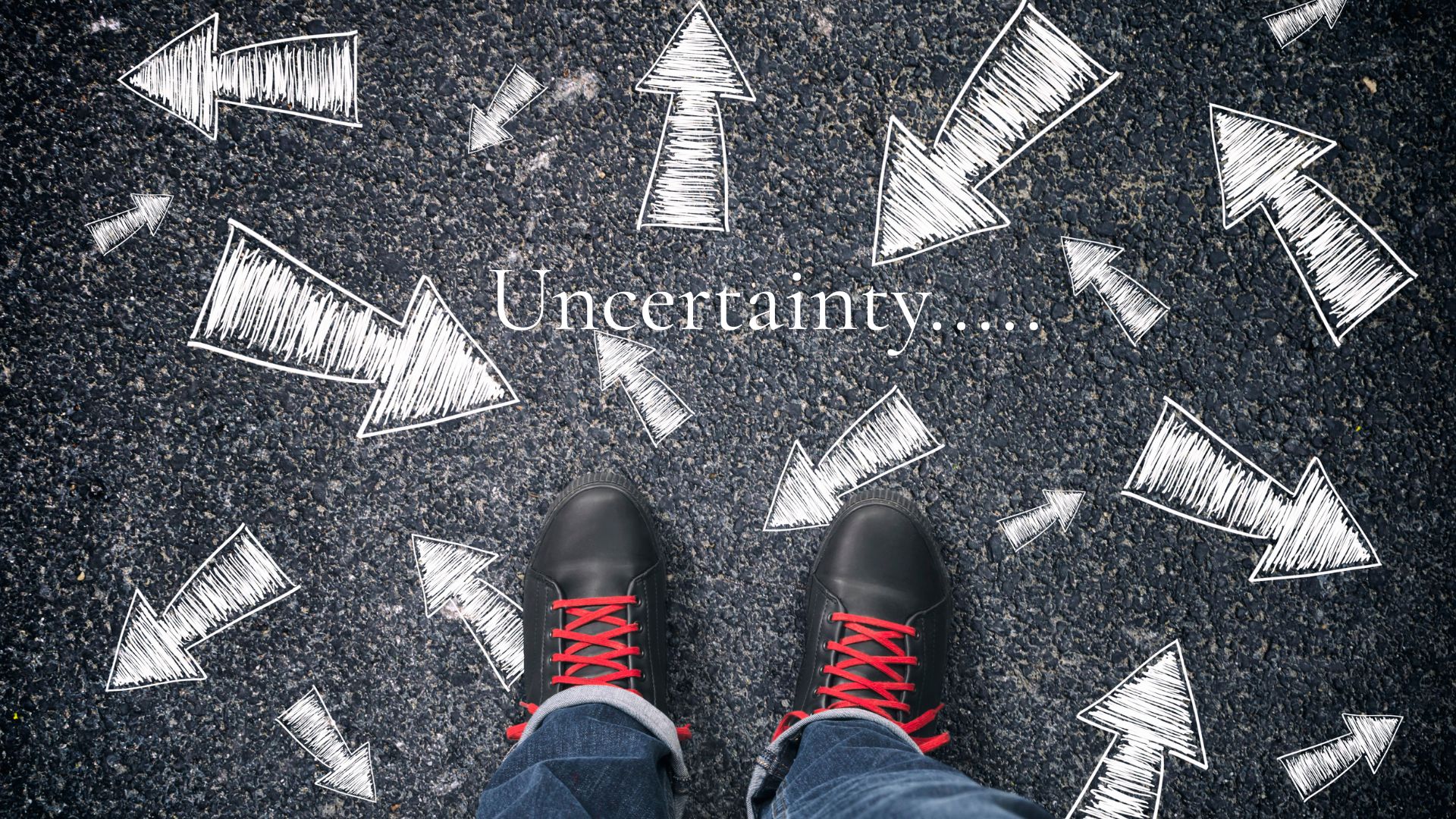
We tend to believe that those who build something meaningful begin with clarity.
That before the first step is taken, the path is already visible.
That founders move forward because they know.
But if you sit long enough with the real stories, the ones that unfold behind the headlines, you begin to notice something else.
Something far less structured, and far more human.
Most founders do not begin with certainty.
They begin at the edge of it; carrying doubt, courage, conviction, and a quiet, persistent belief.
The first step into entrepreneurship rarely looks like a grand beginning.
There is no moment where everything aligns and the way forward becomes obvious. Instead, there is often a pause, a hesitation that lingers longer than expected. A quiet negotiation between what is known and what is not.
The mind searches for assurance—more data, more validation, one more sign that this will work.
But it rarely arrives.
And somewhere within that absence, a decision is made; not because everything is clear but because something within refuses to remain where it is.
That is where the journey of an entrepreneur begins.
The Myth of the “Prepared Founder”
We often assume that founders begin their journeys with clarity, armed with well-structured plans and a clear sense of direction. It is a narrative that makes success feel orderly and predictable, as if the path from idea to enterprise can be carefully designed before the first step is taken.
But when you move beyond this perception and step into the lived experiences of founders, the reality unfolds very differently. Entrepreneurship does not begin with certainty or complete preparedness. It begins in the presence of doubt, with incomplete information, evolving problems, and outcomes that are far from guaranteed.
The idea of a “fully prepared founder” is, in many ways, a myth. Founders rarely start with all the answers because the environments they operate in are constantly shifting. Markets evolve, customer needs reveal themselves gradually, and even the problem itself becomes clearer only after engagement begins.
What appears as a plan at the start is, more often than not, a hypothesis—something that must be tested, reshaped, and sometimes entirely reimagined.
The plan, if it exists at all, is fragile.
It bends with the first real encounter with the market. It reshapes itself with every conversation, every failure, every unexpected insight. What seemed certain at the beginning slowly dissolves, making space for something more grounded, more real.
“Founders do not build by following a script.
They build by staying in motion long enough for the script to reveal itself.”
Uncertainty Is Not Chaos—It’s the Terrain
In this context, uncertainty is often misunderstood. It is not chaos, nor is it a sign of lack of direction. Instead, it is the natural terrain of entrepreneurship, the space within which founders operate, make decisions, and learn. Rather than attempting to eliminate uncertainty, successful founders develop the ability to move through it, using it as a source of insight rather than a barrier.
Their approach is dynamic, shaped by real-time learning and feedback. They test ideas, adapt strategies, and refine their understanding as they move forward.
“Clarity, in practice, does not precede action.
It emerges because of it.”
From The Far Acre: Stepping Without a Map
This truth finds a powerful reflection in the journeys captured in The Far Acre. Across every chapter, a common thread becomes visible: none of the founders began with a complete blueprint.
Anand Chandra did not build Arya.ag by following a predefined system; instead, he responded to the complexities of the agricultural ecosystem as they unfolded, building layer by layer. Salil Srivastava did not scale Scimplify from a position of certainty; he navigated a fragmented chemical industry by building trust and learning continuously. Vijendra’s journey with Feedsco was shaped not by a static plan but by listening to the realities of Bharat’s markets, which demanded constant adaptation. Similarly, Vamsi Krishna’s work with AgriSensei evolved through direct engagement with farmers, where insight emerged through interaction rather than prior assumption.
These journeys reinforce a simple yet profound idea:
“Founders do not begin because they are ready.
They become ready because they begin.”
The Real Risk: Waiting for Certainty
There is also an important paradox at play. Many aspiring entrepreneurs hesitate to start because of uncertainty, believing that waiting will reduce risk. In reality, the opposite is often true. In rapidly changing environments, certainty rarely arrives in advance. It is constructed over time through action, iteration, and learning. Waiting for perfect clarity can lead to stagnation, while those who move forward—despite uncertainty—gradually build the knowledge and confidence they seek.
As you travel through The Far Acre, something begins to change.
The uncertainty does not disappear.
But your relationship with it does.
What once felt overwhelming begins to feel familiar.
What once held you back begins to move you forward.
It is the moment when you realize that certainty is not coming.
That no amount of waiting will make the decision easier.
That the unknown will not shrink just because you stand still.
And in that moment, something shifts.
You stop trying to eliminate uncertainty.
You begin to carry it with you.
Founders Don’t Execute Plans—They Evolve Them
This is what distinguishes founders, they are willing to act without complete readiness. They learn faster than they plan, treat uncertainty as feedback, and remain flexible in their approach. Their strength lies not in predicting the future with precision but in adapting to it effectively.
Beyond building ventures, uncertainty plays an even deeper role. It shapes the individual behind the enterprise. It cultivates resilience, sharpens judgment, and strengthens the ability to navigate ambiguity.
Perhaps this is the most important shift in perspective for anyone standing at the edge, contemplating the first step. Entrepreneurship is not a path that reveals itself in advance. It is a path that becomes visible only as you walk it.
You do not step forward because you are certain.
You become certain because you stepped forward.
Written by:
Akanksha Shukla
Author: The Far Acre
Founder & Director: Meraas Heritage Foundation
#TheFarAcre #Entrepreneurship #Founders #Leadership #Startups #Uncertainty #Becoming #Mythsofentrepreunership